


Mass tourism, carbon footprints, geopolitics – how is travel changing?
ISLAMIC TIMES – The coming years will show that it is not only flight schedules, visa regulations and hotel prices that are changing travel – but above all our psyche. Geopolitical tensions, the climate crisis, war in Iran, uncertainty in the Gulf region: all of this ends up not only in the news, but also in our minds. And from there, it finds its way into our search queries, booking decisions and the way we talk about our travels.
Travel as a psychological crisis laboratory
Travel has always been a game with the unfamiliar: novelty, a break from everyday life, the chance to be someone else for a few days. But the more conflict-ridden the world becomes, the clearer it becomes that the classic travel motive of ‘escaping reality’ no longer works. The crises travel with us. Psychologically, every journey is a condensation of emotions. In the past, the desire for discovery and relaxation was at the forefront.
Now, new feelings are pushing their way in: subliminal fear and moral doubts. Those who hesitate to book a trip to a crisis region today are not only wrestling with the question ‘Is it safe?’, but also with the question ‘What does it mean that I can afford this while others have to flee there?’ Travel thus becomes a mirror of our times: we move around – but we feel how fragile this freedom of movement has become.
Between flight shame and wanderlust: the moral tension
A second, quiet but increasingly strong pressure comes from the climate crisis. Even before the recent wars, something began to shift: the abstract ‘carbon footprint’ became concrete feelings – flight shame, eco-guilt, the uncomfortable knowledge that one’s own city trip is part of a problem that has long since taken on planetary dimensions. Interestingly, this does not automatically lead to people simply stopping travelling. Instead, a psychological divide is opening:
• On the one hand, awareness and moral standards are growing: ‘I want to travel more sustainably.’
• On the other hand, convenience, habit and longing remain: ‘I need this break – and flying is simply the easiest way.’
This tension gives rise to typical coping strategies: people fly less often, but for longer periods. They justify long-distance travel with ‘meaning’ – booking retreats and educational trips or seeking out volunteer work.
Or they defiantly opt for ‘business as usual’ and try to drown out their discomfort. For more travellers, the ecological footprint is becoming part of an internal dialogue that accompanies every booking.

Photo: Graphic Design Blog
Geopolitics – an important factor in travel decisions
The war in Iran, missiles in the Middle East, attacks on shipping routes, political tensions in the Gulf: what used to be perceived as ‘far away’ now directly affects travel plans. This is not only due to travel warnings, but also to images and narratives that burn themselves into our sense of risk. A new fundamental question arises for travellers: how much uncertainty can I tolerate and am I willing to tolerate?
In the past, risk was often thought of in terms of categories such as ‘crime’ or “health” (vaccinations, hygiene, diseases). Now, the dimension of ‘conflict’ is coming much closer to popular holiday regions. The Gulf states – long portrayed as safe luxury destinations – are being overshadowed by regional escalation.
Today, when people think of Dubai or Oman, they think not only of resorts and deserts, but also of airports as possible targets, of airspace that could suddenly be closed, and of the question: ‘What if things escalate during my stay?’
It remains to be seen how long travellers’ minds will remain influenced by these perceptions. It is likely that geopolitical issues will change the psychological profile of travellers in the medium term:
• Spontaneity will be replaced by scenario thinking (‘What if…?’).
• The choice of destination will become a political decision – or at least feel like one.
• Safety will move from being a marginal criterion to the top of the list of priorities.
The result: many people will not travel less, but differently. They will switch to regions perceived as stable, postpone ‘unsafe’ destinations indefinitely, choose countries they trust politically – or where they can ‘get out’ more quickly in case of doubt.
The psychologization of travel behaviour
All these developments are leading to an overarching trend: travel is becoming more psychological. The relevant questions for the future are no longer just ‘Where is it beautiful?’ or ‘Where is it cheap?’, but rather:
• Where do I feel morally at peace?
• Where do I feel safe – not just objectively, but subjectively?
• What kind of trip fits my self-image in a crisis-ridden world?
From this, we can sketch out a few lines of how travel behaviour is likely to change:

Photo: hafizismail, Adobe Stock
1. More flexibility, less long-term planning
In a world of constant crisis, flexible bookings are becoming more valuable. Last-minute decisions, cancellable fares and open itineraries are becoming psychological safety nets. The message: ‘I can get out at any time.’ That’s reassuring – and so this flexibility itself becomes a selling point.
2. Less, longer, more conscious
Long-distance travel is becoming less frequent, but longer and more intense. Those who fly want more ‘value for money’ – not only financially, but also emotionally and morally. The classic three-day city break via cheap flight to the nearest metropolis seems increasingly out of step with the times. Instead, forms such as slow travel, longer stays, workations and sabbaticals are gaining in attractiveness.
3. Escape from the masses – and from oneself
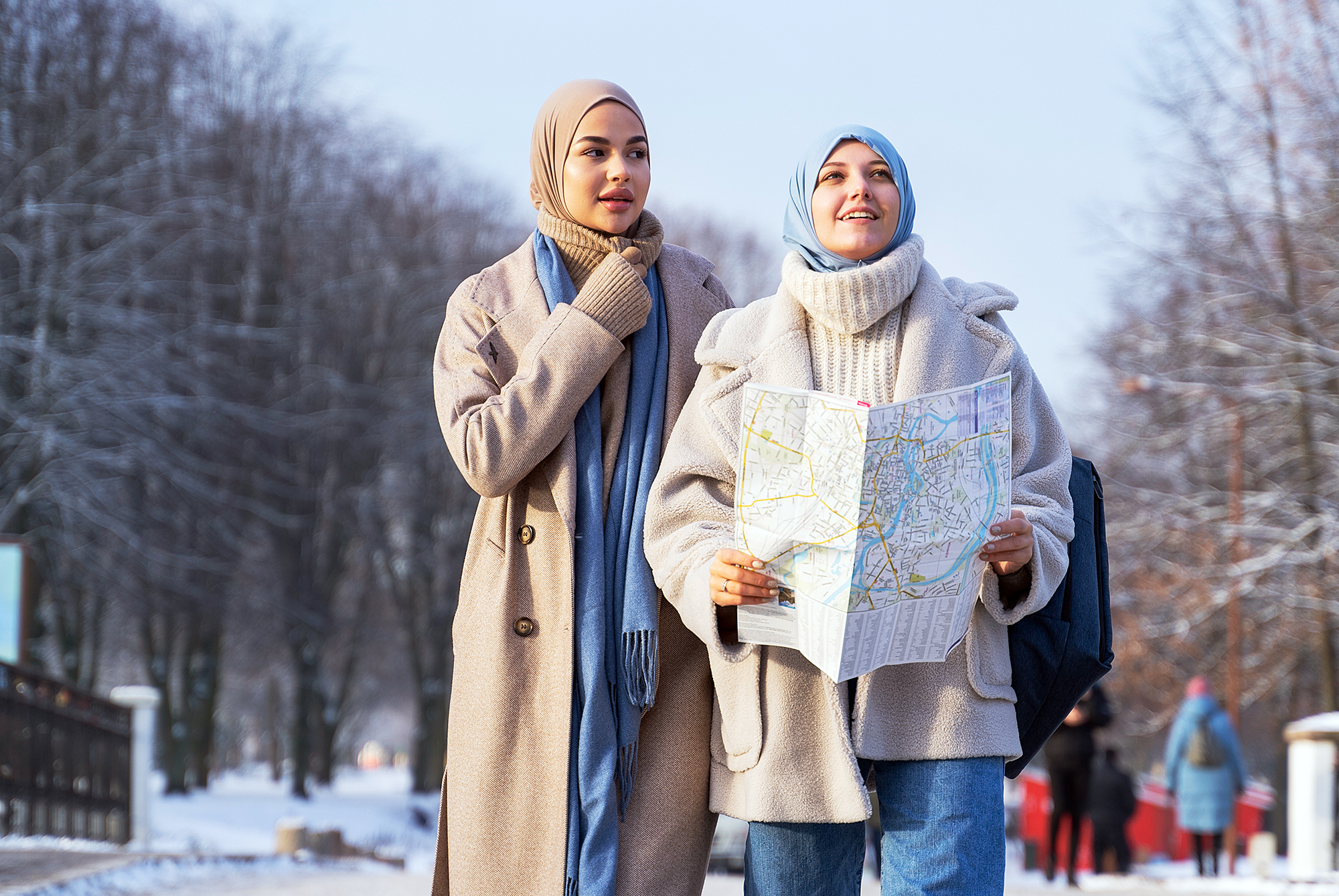
For many, mass tourism hotspots have become symbols of the wrong world: overcrowded, ecologically questionable, often politically ambivalent. There is a growing longing for ‘quieter’ places, for destinations that are not yet marked on the global Instagram grid. Behind this lies not only a desire for authenticity, but also an attempt to break away from the stigma of being an ‘uncritical tourist’.
4. Travel as a distinguishing feature of the future
Those who make well-informed, risk- and climate-conscious decisions and try out new forms of travel can derive a new sense of prestige from this: ‘I travel reflectively.’ This self-image is the antithesis of package tours and cruises. Travel decisions thus become statements – even on social media. The feed no longer just shows ‘where I’ve been,’ but ‘who I am in this crisis-ridden world.’
5. Emotional risk management as a new skill
In future, it will not only be logistics that are important, but also the ability to deal with uncertainty: filtering news, classifying warnings, regulating one’s own fears. Those who can do this will travel differently – and probably further, more courageously, but with more conscious preparation. Those who cannot or do not want to do this are more likely to retreat: to supposedly ‘safe’ countries, to familiar patterns, to a narrower field of movement.
A new narrative of being on the move
For travel blogs, media and halal tourism brands, this means that the grand narrative of travel must change. The old story – ‘you work to earn your escape’ – no longer holds water. The new story could be: you don’t travel to escape the world, but to find your place in a vulnerable world.
This means that geopolitical tensions cannot simply be ignored but must be contextualised in the future. Ecological costs cannot be brushed aside but must be negotiated honestly. It is not a question of pathologizing psychological dynamics, but of taking them seriously: fear, guilt, longing, curiosity, hope – they all travel with us.
The good news is that this very concentration presents an opportunity. In future, travel can be less about consumption and more about awareness – a space for experience in which we learn to live with complexity without losing sight of beauty.
The question is not whether we will travel less or more in future. The question is how we want to travel, how we give meaning to modern travel – and what stories we tell ourselves in the process.